
Study In Italy
Italy Is One Of The Best Country In The World For International Education. We Will Guide You Why You Should Choose Italy As Your Study Abroad Destination.
Guide For Study Abroad In Italy
Whether you want to know about the Education System of the Italy Or want to know what Italy is Like. We will cover all the necessary topics to give you an overall understanding of the Italy.


Why Study In Italy?
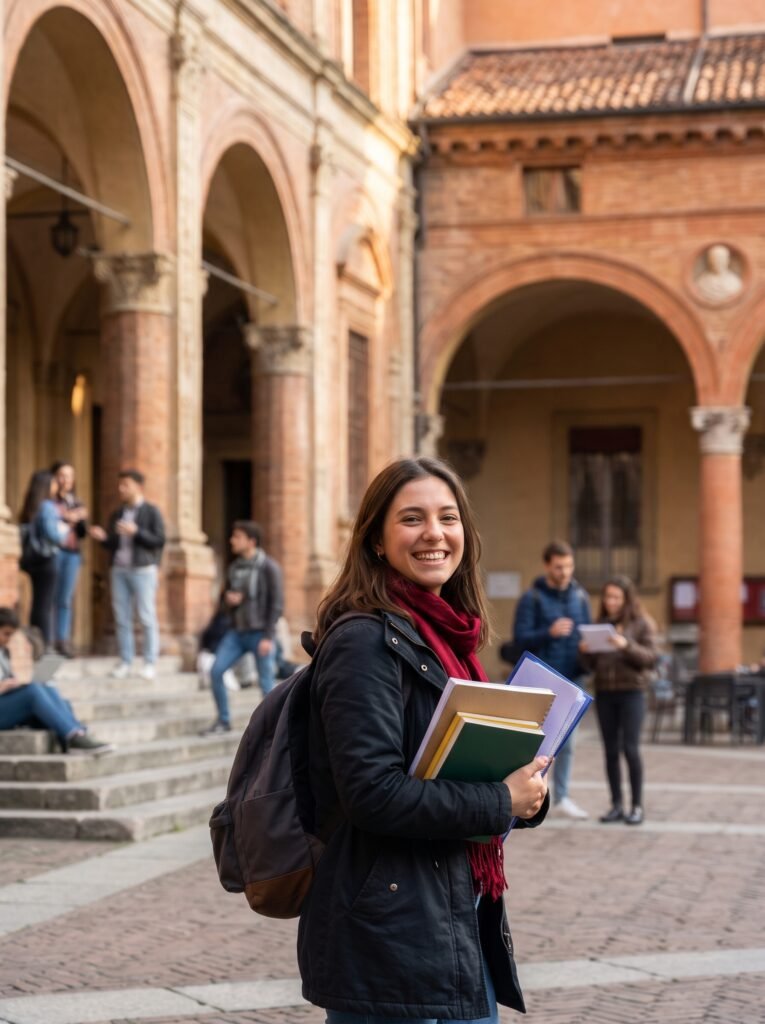
Italy
is an attractive study destination for international students because of its historic, globally recognized universities, high-quality education, affordable tuition fees, and vibrant Mediterranean lifestyle.
Home to the world’s oldest university, Italy offers world-class English-taught degree programs, generous regional scholarships, and a rich cultural experience in the heart of Europe.

World-Class Education
Italy is globally recognized for having an outstanding and historic higher education system. Home to some of the world’s oldest and most prestigious universities, Italian qualifications are highly valued by employers worldwide.

Standard Of Living
Italy offers an exceptional standard of living, blending rich cultural heritage with a warm Mediterranean lifestyle. Renowned student cities like Milan, Rome, Bologna, and Florence are celebrated for their safety, vibrant social scenes, and historic beauty. .

Student Support
Italy institutions provide a wide range of student support services to help students settle into their new life in Italy. Students have access to on-campus services such as orientation programs, counselling, health and wellbeing support, academic and English language assistance, career advice, and student associations.

Work While Study
Many Italy degree programs and vocational courses include internships or work experience programs, so students can gain hands-on experience and grow their professional network while they’re studying. International students are allowed to work up to 40 hours over 14 days or a two-week period during the semester and full-time during semester breaks.

Lifestyle
International students can enjoy Italy’s vibrant culture and lifestyle during the duration of their studies. Italy offers a unique mix of big city life and thriving regional centres as well as lots of green space and amazing landscapes. Students can experience surfing at world famous sea ports, hiking in national parks, do some shopping, and revel in the exciting nightlife in Italy’s city centres.
Post Secondary Education System

Qualifications
Qualifications earned at Italian higher education institutions are highly regarded and recognized globally under the European Higher Education Area (EHEA).
The higher education system in Italy follows the European Bologna Process structure and awards ECTS (European Credit Transfer and Accumulation System) credits. It is comprised of prestigious public universities, technical polytechnics, and specialized AFAM institutions (Art, Music, and Dance), ensuring seamless qualification recognition across Europe and worldwide.
Italian institutions offer a wide range of English-taught degree programs, including Bachelor’s (Laurea), Master’s (Laurea Magistrale), and PhDs across medicine, engineering, business, fashion & design, humanities, and sciences.

Bachelor's Degree
(Undergraduate)
Bachelor’s degree courses include developing knowledge and skills in one or more specializations. Bachelor’s degree courses prepare students for postgraduate studies or professional work. The length of the degree may vary depending on the course. Arts and science degrees are usually three or four years of full-time study, and professional degrees can take three to six years to complete.

Master's Degree
(Postgraduate)
There are three types of master’s degrees that students can earn in Italy: research, coursework, and extended. Most master’s degrees take one or two years of full-time study after the completion of a bachelor’s degree.
Pathway Programs
There are different pathway programs available for students that can help them improve their academic performance and meet admissions requirements, including English language, foundation studies, and bridging courses.

English Language Courses
Many degree programs in Italian universities are taught entirely in English, so international students must demonstrate a proficient understanding of the English language through standardized tests or accepted qualifications.
English-taught programs in Italy strictly adhere to European quality standards under the Ministry of Universities and Research (MUR). This ensures that international students receive high-caliber instruction and globally recognized degrees.
Italian universities also offer Foundation Year programs and preparatory English courses designed for students who need to boost their language proficiency or fulfill entry requirements before starting their main degree in Italy.

Academic Pathways
Academic pathway and Foundation Year programs in Italy focus on core academic subjects, offering international students specialized preparatory coursework in mathematics, sciences, business, medicine, arts, and humanities. These programs enhance subject knowledge and bridge qualification gaps to fulfill prerequisite entry requirements for undergraduate and postgraduate studies across Italian universities.
Designed specifically for international students transitioning into the Italian education system, pathway courses boost academic qualifications and prepare students for university admission evaluations and entrance tests (such as TOLC or IMAT), ensuring full readiness for subject-specific degree studies in Italy.
Financial Cost & Work Options

Financial planning
Financial planning is one of the most important steps when preparing for education in Italy as an international student. While public universities in Italy offer significantly lower tuition fees compared to other destination countries, students still need to carefully budget for accommodation, food, transportation, health insurance, study materials, and personal living expenses.

Cost Of Living
The average cost of living for an international student in Italy ranges between €700 and €1,000 per month (€8,400 to €12,000 per year), covering accommodation, food, transportation, health insurance, and personal expenses.
Major metropolitan hubs like Milan and Rome are Italy’s most expensive cities to live in, where housing and daily living costs are higher compared to the national average.
Students can find significantly more affordable living options in smaller, student-centered university towns such as Turin, Bologna, Padua, Perugia, Pisa, and cities across southern Italy.

Working While Study
International students have the opportunity to gain valuable European work experience while they study in Italy.
Working while studying gives students a competitive edge in the global job market and allows them to build practical skills alongside their academic degree. Non-EU international students with a valid study permit are legally allowed to work part-time for up to 20 hours per week during semester terms (and up to 1,040 hours per year), helping them manage living expenses while enhancing their CV.
International students can choose from flexible on-campus student positions, off-campus part-time jobs, or industry internships across Italy. Let’s learn more about these flexible employment opportunities.
On Campus Employment
Working on campus at an Italian university is a highly convenient option for international students. Most Italian public universities offer official paid student assistantships (commonly known as “150 Ore” student collaborations), allowing you to earn money directly where you study.
On-campus work provides flexible hours designed to fit around your lecture timetable while helping you become familiar with university administration and academic departments. Here are some common examples of on-campus employment opportunities in Italy:
University library or archives assistant
International student helpdesk or orientation assistant
Administrative support in department offices
IT lab and computer center support
Peer tutor or academic mentor for junior students
Event assistant for university conferences and campus activities
Students can apply for these paid positions directly through their university’s official online student portal (Portale dello Studente) during annual calls for applications (bando).
Off Campus
Employment
Working off-campus gives international students in Italy a great opportunity to immerse themselves in the local culture, practice their Italian, and connect with the community. Under Italian law, non-EU international students with a valid study permit (Permesso di Soggiorno) can work legally off-campus for up to 20 hours per week during semesters.
Off-campus employment spans hospitality, retail, tourism, and private tutoring. Here are some popular examples of off-campus employment in Italy:
Staff member at a local cafe, pizzeria, or gelateria
Retail assistant at clothing stores or local shops
Private English tutor or language instructor
Hospitality assistant at hotels or tourist information centers
Customer service representative or administrative staff
Freelance digital services or remote work
Students can discover off-campus job opportunities using popular Italian job portals (such as Indeed Italia, LinkedIn, and InfoJobs), university career boards, and local community networking

Postgraduate Work Permit
International students who have graduated from an accredited Italian higher education institution can pursue post-study work opportunities in Italy through the Job Search Residence Permit (Permesso di Soggiorno per Attesa Occupazione).
Post-Study Work Stream:
The Post-Study Work Permit in Italy allows eligible non-EU international graduates to legally reside in Italy for 12 months (1 year) after graduation to search for a job or launch a business. Once an employment contract or self-employment opportunity is secured, this permit converts seamlessly into a standard Italian Work Permit (Permesso di Soggiorno per Lavoro).
According to Italian Immigration Regulations, graduating students need to meet the following requirements to apply:
Hold a valid Italian student residence permit (Permesso di Soggiorno per Studio) or be within its renewal period.
Successfully graduate with an accredited Bachelor’s, Master’s, or PhD degree from a recognized Italian university.
Provide an official graduation certificate or university degree diploma (Certificato di Laurea).
Provide evidence of adequate financial self-sufficiency for the 12-month job search period.
Provide evidence of valid health insurance coverage (Assicurazione Sanitaria) in Italy.
Register with the local Italian Employment Office (Centro per l’Impiego) as an active job seeker.
Provide proof of registered housing/accommodation (Dichiarazione di Ospitalità) in Italy.
Once a full-time job is secured, graduates can convert their permit to a long-term work status, which also permits eligible family members to accompany or join them in Italy under standard European family reunification laws.
Graduate Work Stream:
The Job Search Residence Permit (Permesso di Soggiorno per Attesa Occupazione) allows eligible non-EU international students who have graduated from an accredited Italian university to remain and work in Italy for up to 12 months (1 year) to seek employment or start a business.
This stream is designed for international graduates with recognized higher education qualifications in Italy looking to transition into the European labor market.
According to Italian Immigration and University Regulations, graduates need to meet the following requirements to apply:
Hold a valid Italian student residence permit (Permesso di Soggiorno per Studio) or be within its official renewal window.
Hold an eligible qualification (Bachelor’s degree, Master’s degree, or PhD) awarded by a recognized Italian university.
Provide an official university degree certificate or graduation diploma (Certificato di Laurea).
Provide proof of sufficient financial funds to cover living expenses during the 12-month job search period.
Provide evidence of valid health insurance coverage (Assicurazione Sanitaria) in Italy.
Register as an active job seeker with the local Italian Employment Office (Centro per l’Impiego).
Provide proof of valid accommodation/housing (Dichiarazione di Ospitalità) in Italy.
Once a full-time job offer or employment contract is secured, this permit converts into a standard Work Permit (Permesso di Soggiorno per Lavoro), allowing graduates to build their professional careers and bring family members along under European family reunification laws.
Paths To Settlement
After graduation, many international students consider the opportunity to build a long-term professional career in Italy and work towards European permanent residency.
International students can transition from student status to permanent settlement in Italy through a structured legal pathway. The process begins by converting a student residence permit (Permesso di Soggiorno per Studio) into a work permit (Permesso di Soggiorno per Lavoro) or job search permit (Attesa Occupazione). University graduates from accredited Italian institutions benefit from quota exemptions when converting their permits into full-time employment status.
The primary pathways to long-term settlement for international graduates in Italy involve the following steps:
Converting a student permit into a 1-year job search permit or direct employment work permit.
Securing a formal employment contract or establishing a registered business.
Maintaining continuous legal residence and tax contributions in Italy.
Applying for the EU Long-Term Residence Permit (Permesso di Soggiorno UE per Soggiornanti di Lungo Periodo) after completing 5 years of legal residence.
To qualify for EU Long-Term Residence (Permanent Residency) in Italy, applicants are evaluated based on their continuous stay, financial independence, and social integration.
Applicants must meet the following core requirements to obtain long-term settlement status:
Minimum of 5 years of continuous legal residence in Italy.
Proof of a stable annual income meeting or exceeding the official national social allowance threshold.
Proof of Italian language proficiency (minimum A2 level certification).
Clean criminal record check (Certificato del Casellario Giudiziale).
Proof of suitable housing and accommodation compliance (Idoneità Alloggiativa).
Active health insurance or registration with the Italian National Health Service (SSN).
After completing 10 years of continuous legal residence, permanent residents become eligible to apply for full Italian citizenship by naturalization.